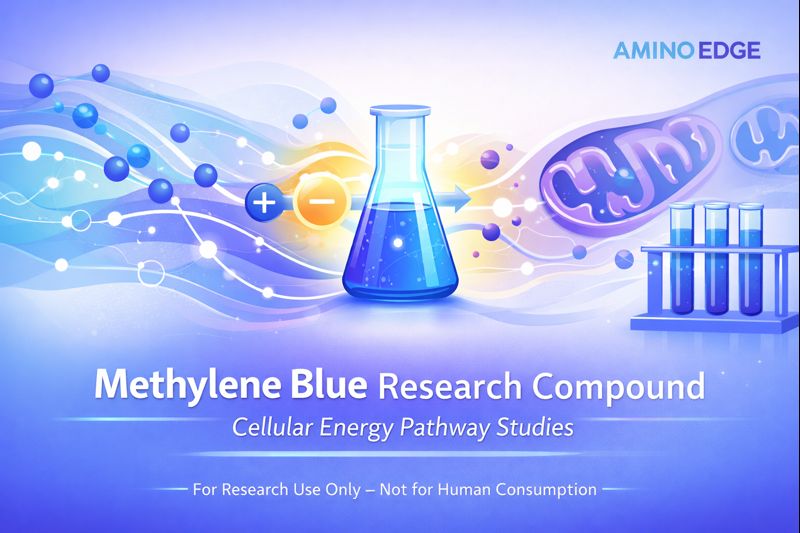
What is Methylene Blue?
Methylene Blue is a laboratory-studied compound with a long history of scientific use in chemistry and biological research. In modern research settings, interest in Methylene Blue centres on how it interacts with cellular energy systems, particularly within mitochondria.
Why researchers are interested in Methylene Blue
In simple terms, cells rely on complex energy-producing pathways to function. Methylene Blue is studied because it appears to interact with these pathways in a measurable and controlled way in laboratory models.
Research interest focuses on how Methylene Blue may participate in cellular redox reactions, interact with mitochondrial energy transfer processes and influence how cells manage oxidative balance under experimental conditions.
How Methylene Blue differs from other research compounds
Many research compounds influence multiple biological systems at once. Methylene Blue is studied for its specific interaction with cellular energy pathways rather than broad systemic activity.
This narrower research focus allows scientists to investigate mitochondrial and redox mechanisms without introducing widespread biological variables making it valuable for mechanistic research models.
Areas of ongoing research interest
Current areas of laboratory research involving Methylene Blue include mitochondrial function models, cellular energy regulation, redox biology and oxidative stress pathways and metabolic and neurochemical research frameworks.
These findings remain experimental and are limited to laboratory and preclinical research environments.
hello@aminoedge.online
© Copyright 2026 Exploring the Science of Peptides